IRON NEST: Heavy Turret Simulator Chemical & Incendiary Shells
Phosgene, tear gas, and pyro —area denial, suppression, and fire where blast and AP fall short.
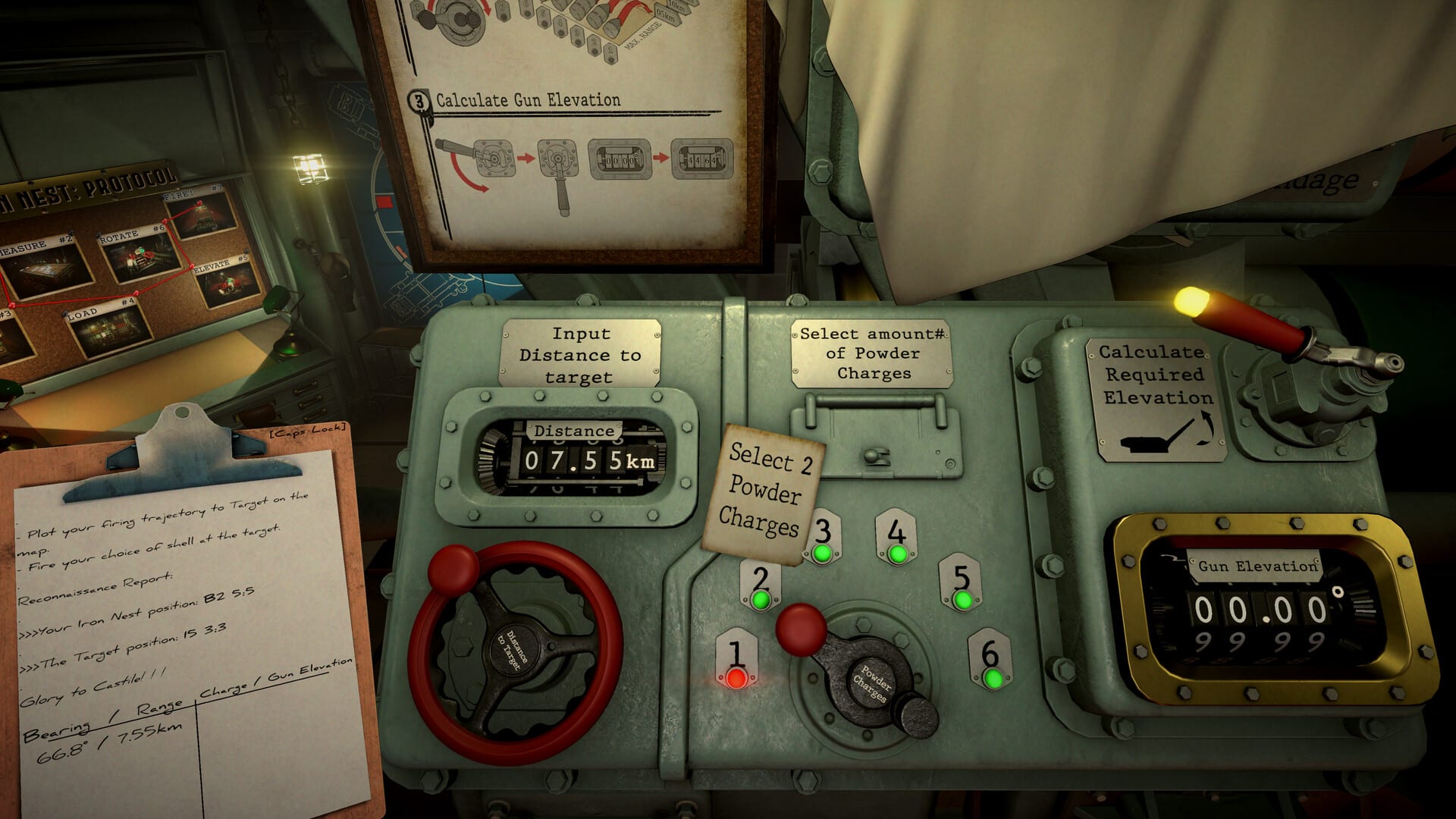
IRON NEST’s alternate-history setting includes some of the grimmest ammunition types on the rack: Phosgene Gas (PGAS), Tear Gas (TGAS), and Pyro / Incendiary (PYRO) shells. These are not general-purpose loads. High Command restricts chemical fires through teleprinter language and mission rules of engagement. Using PGAS when orders forbid it triggers investigations; using HE when orders demand infrastructure-preserving chemical clears fails equally hard.
This page covers each shell’s role, tier placement, safety habits including the G gas mask bind, and how chemical loads differ from Smoke & Star Shells concealment rounds. Start with Shell Tier List for S/A/B context against personnel and entrenchment targets.
Shared traits of chemical and incendiary family
| Trait | Implication |
|---|---|
| Wide blast / cloud radius | Strong area effect; friendly-fire risk on blue tokens |
| Low or zero direct damage on some entries | Scoring emphasizes suppression, denial, or fire spread |
| Order sensitivity | Many missions require explicit authorization |
| Same range table | Powder charge 1— still applies —Physical Gun Controls |
Plot carefully on Map Console Tools before any wide-area shell. Measure drag confirms radius against friendlies.
Phosgene Gas (PGAS)
Role
Phosgene saturates a grid area with lethal choking agent. Effective against unarmored personnel, civil unrest formations, and infantry in the open where command wants bodies neutralized but buildings left intact for occupation or propaganda value.
When PGAS is S-tier
- Teleprinter names phosgene, chemical, or gas.
- Mission grades on personnel elimination with structure preservation.
- Infantry in trenches without hardened overhead cover —gas fills voids HE skips.
When PGAS is wrong
- Armored targets —AP on Armor-Piercing Shells.
- Bunkers with sealed NBC protection —intel sometimes flags immune structures.
- Unauthorized ROE —default to HE until HQ clears chemical.
Operator safety
Toggle gas mask with G before handling chemical missions or entering contaminated grid markers post-impact —Default Keybinds. Immersion aside, the bind is the fastest protection toggle when scripts add environmental hazard.
Tear Gas (TGAS)
Role
Tear gas delivers non-lethal CS-class irritant over a wide area to suppress and disperse crowds and infantry without the lethality PGAS implies. Blast radius sits in the wide family similar to smoke and phosgene data profiles.
Current mission use
TGAS appears on the rack in demo builds but many available operations never grade on it. Treat TGAS as B-tier until a briefing explicitly rewards non-lethal dispersal. Future campaign updates may activate riot-control scenarios referenced in developer materials.
When TGAS might rise to A-tier
- Orders mention non-lethal, dispersal, or tear gas.
- Scenarios mirroring civil unrest where kills penalize score.
- Combined with SMK from Smoke & Star Shells for screen then suppress.
Pyro / Incendiary (PYRO)
Role
Pyro shells ignite flammable terrain and structures, flushing entrenched infantry where kinetic rounds fail to dislodge. Damage profile emphasizes fire spread over instantaneous blast —ideal for wooden fortifications, supply dumps marked flammable, and positions immune to quick HE clears.
When PYRO is A-tier or S-tier
- Entrenched soft targets under cover HE cannot reach.
- Flammable asset destruction explicitly in briefing.
- Follow-up to AP breach —open hardened shell with AP, PYRO interior if mission allows.
When PYRO is wrong
- Pure armor faces —AP first.
- Missions forbidding collateral fire near civilian zones marked on map.
- When HCHE overpressure suffices —High-Explosive Shells may be cheaper.
Chemical vs smoke vs HE —decision table
| Goal | Load |
|---|---|
| Kill personnel, save buildings | PGAS (if authorized) |
| Disperse without kills | TGAS (when missions support) |
| Hide movement | SMK |
| Burn entrenched soft cover | PYRO |
| Destroy generic soft target | HE |
| Destroy bunker | AP |
Loading and platform discipline
Chemical and incendiary shells use the same selector —rammer —powder charge sequence as HE. Mis-selection is dangerous under timer:
- Read shell label at selector gauge.
- Ram once; verify chamber indicator.
- Load charge count from calculator —never copy charge from previous fire if range changed.
Dual-gun: never mix PGAS clipboard data with HE barrel loading.
Ethical and narrative framing
IRON NEST presents chemical ammunition as part of its bleak setting, not as a bonus damage multiplier. Wiki operators should treat PGAS like a mission tool with strings attached, not a default upgrade over HE for convenience.
Requisition notes
Phosgene and specialty loads often sit outside cheap HE pricing. Budget-conscious operations should reserve PGAS for graded objectives, not experimentation on stray tents.
Correction and observation
Chemical and incendiary effects may require longer observation before grading registers. STAR illumination from Smoke & Star Shells can help assess cloud spread on night maps before HQ declares success.
Related pages
- Shell Tier List —chemical tiers by target
- Ammunition hub —full rack
- Smoke & Star Shells —concealment vs lethality
- High-Explosive Shells —kinetic alternative
- Armor-Piercing Shells —hardened targets
- Map Console Tools —radius plotting
- Default Keybinds —G gas mask
- Getting Started —demo ROE intro
- Guides hub —chemical operation walkthroughs
Frequently Asked Questions
Quick answers to the most common questions.
When am I allowed to fire phosgene?
Only when High Command orders specify chemical ammunition or rules of engagement explicitly authorize PGAS. Unauthorized chemical fire fails mission grading.
What does the gas mask key do?
G equips and unequips the gas mask quickly. Use it during chemical missions or when operating near contaminated grid areas after impact.
Is tear gas useless in the demo?
TGAS is implemented on the rack but few current missions grade on non-lethal dispersal. Expect future operations to activate it.