IRON NEST: Heavy Turret Simulator 15 Regions Across Fracturing Spain
Alternate-history theaters where your grid plots become front-page history.
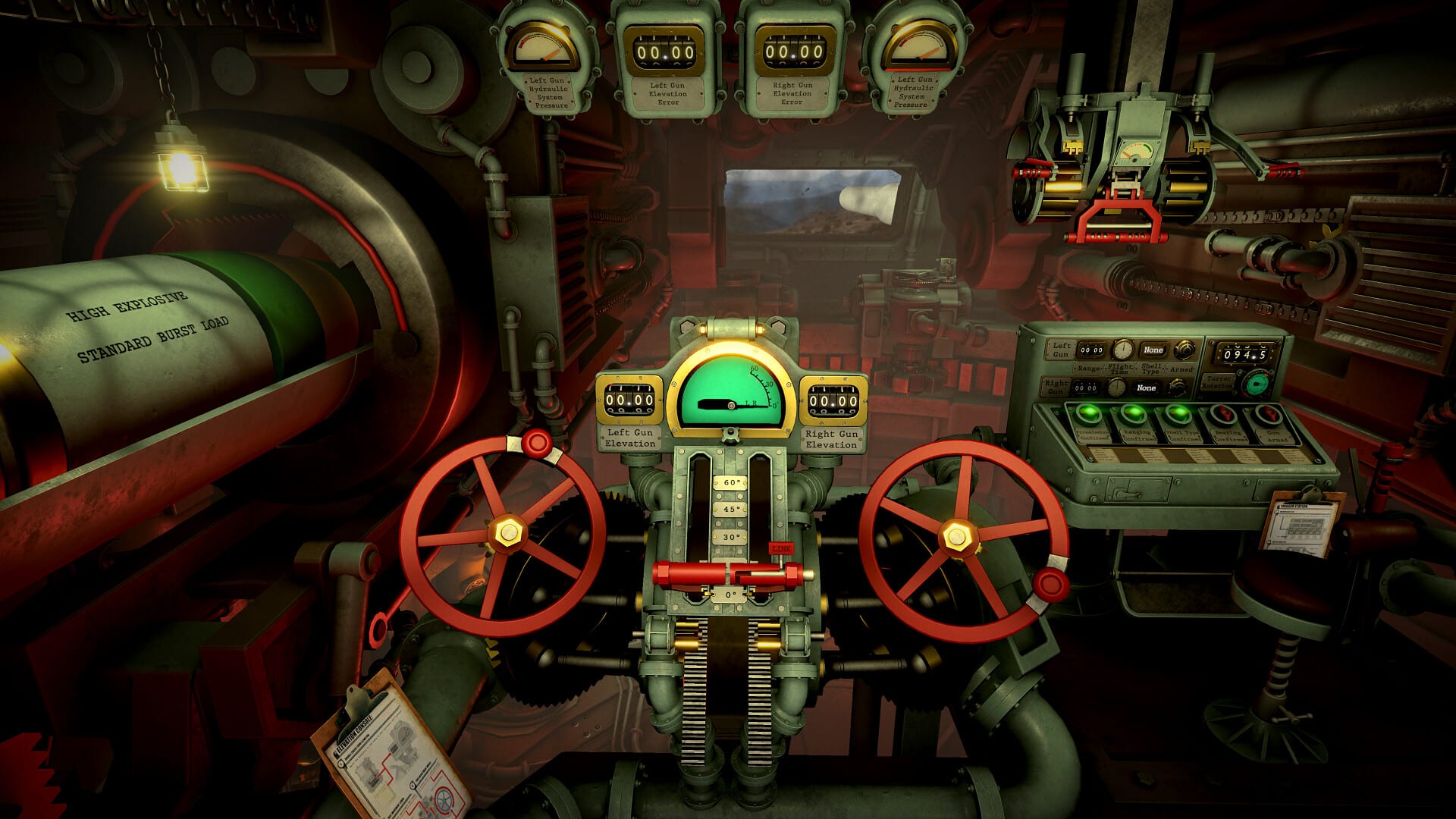
IRON NEST’s campaign is a march across fifteen distinct regions in an alternate-history Spain of the late 1920s. In this timeline World War I never happened, European monarchies endured longer, and industrial dieselpunk war machines —including the colossal turret you operate —define battlefields that look familiar on a map yet politically diverge from our own history. A royalist government clings to power while a republican uprising spreads; your orders arrive as coordinates, but the geography decides what those coordinates mean.
This page summarizes how regional variety shapes gameplay. For plotting technique, use tactical grid tools; for the procedure that turns plots into fire, see fire control loop.
Setting without copying a real civil war
Developers describe the backdrop as inspired by real geography but fictionalized politically. Factions, names, and newspaper voices echo Spanish history without presenting a literal reenactment. That matters for how you read missions: you are not scoring history trivia —you are managing artillery problems inside a coherent alternate world where monarchist propaganda and republican bulletins both react to your shells.
Expect dieselpunk texture everywhere: teleprinters, oil-stained brass, riveted armor, and coastal naval guns repurposed inland. Regions differ in terrain and target mix, not just skybox swaps.
What a “region” changes in practice
Each region bundles:
- Terrain logic —mountains compress range bands; coastlines introduce naval spotting angles; urban grids increase collateral sensitivity in newspaper consequences.
- Target rosters —fortifications, columns, rail yards, amphibious landings, and mobile spotters appear in different ratios.
- Intel quality —some theaters feed clean grids early; others force triangulation and incomplete spotter data mid-campaign.
- Time pressure —counter-battery threat and procedural objective layers tighten the loop in later regions.
- Unlock pacing —new ammunition and abilities appear when regional threats justify them.
Handcrafted narrative beats anchor the march; procedurally generated objectives keep replays from feeling identical.
The fifteen theaters (overview by archetype)
Official materials confirm the count of fifteen without always naming every province pre-launch. Grouped by archetype, the campaign spans roughly:
Northern industrial and port belts
Regions along the Bay of Biscay and northern ports emphasize rail junctions, factory districts, and amphibious supply threats. Plots often include oblique firing angles across harbors and tight collateral windows near civilian docks. Smoke and illumination shells matter as much as raw HE.
Central plateau crossings
Inland highways and plateau towns produce long-range engagements with clearer sight lines but faster enemy counter-battery AI. Range measurement errors punish hardest here because small mils mistakes grow over kilometers.
Pyrenean passes and border forts
Mountain choke points introduce limited traverse arcs and targets hidden in defiles. You may plot multiple provisional points before intel confirms which column is real. Abilities that assist map layering shine in these regions.
Mediterranean coast and islands
Coastal batteries, littoral raids, and island strongholds rotate spotter corrections and wind-sensitive ballistic work. Missions may stress dual-gun sequencing when threats appear from multiple bearings.
Southern agricultural heartland
Open farmland looks easy on the grid until moving columns and tree lines force correction chains. Newspapers here often frame strikes in terms of bread supply and local names rather than grand strategy.
Capital siege and urban belts
Late-campaign urban regions raise the stakes on shell selection and order interpretation. High explosive near dense blocks generates headlines fast; precision roles and disciplined measurement separate controlled outcomes from chaos.
Final convergence theaters
Closing regions merge prior factions and mechanics —mixed intel, scarce requisition, and objectives that test every unlock in the 30-round ammunition table. Challenge modes reuse these tools under leaderboard clocks.
Exact region names and order may shift before August 6, 2026 launch; treat this list as gameplay archetypes confirmed by store and preview materials.
How regions tie to the map table
Every region still uses the same tactical grid: mark turret origin, plot target, derive range and bearing, send numbers to the calculator. What changes is which assumptions fail —wind hints, spotter disagreements, moving targets, and occluded arcs.
Operators who rush from teleprinter to fire control without redrawing lines for a new region’s scale carry demo habits into campaign failures. Reset pencils, confirm grid scale, and verify origin whenever deployment text changes theaters.
Narrative and newspapers across the map
Regional papers emphasize local fears. A port blockade headline reads differently from a plateau bread riot. Because newspaper consequences track your fire, returning to an earlier archetype in replay may still produce new headlines if shell choice and collateral differ.
High Command orders may reference region-specific strategic goals —cutting supply, breaking sieges, supporting loyalist enclaves —without turning the campaign into a faction picker menu. Agency stays operational.
Demo vs full regional map
The free demo teaches the loop on a compact slice of the world. It proves the fantasy but does not expose all fifteen regions. Use demo missions to master measurement; use full release to experience how theaters stack mechanically and narratively.
For a broader launch primer, read everything we know and our review of demo reception ahead of full release.
Region prep checklist
| Before firing | Ask |
|---|---|
| Deployment text | Which region archetype —coast, pass, urban, open? |
| Grid scale | Same table rules, new terrain assumptions? |
| Intel quality | Full grid or triangulation mission? |
| Collateral | Are newspapers sensitive this theater? |
| Loadout | Do new ammo unlocks match regional targets? |
Fifteen regions are fifteen variations on one truth: the map table is where IRON NEST separates operators from passengers. Plot carefully —Spain’s alternate history will remember your lines.
Frequently Asked Questions
Quick answers to the most common questions.
How many regions are in the IRON NEST campaign?
Fifteen distinct regions across alternate-history Spain, combining handcrafted story with procedurally layered objectives.
Is the setting the real Spanish Civil War?
No. It is a fictional alternate history using Spanish geography and civil-war-like tensions without copying real events or factions literally.
Do regions change core controls?
The fire control loop stays the same. Regions change terrain, targets, intel quality, pressure, and unlock pacing.